How Much Does It Cost to Build a Pool in DFW? (2026 Price Guide)
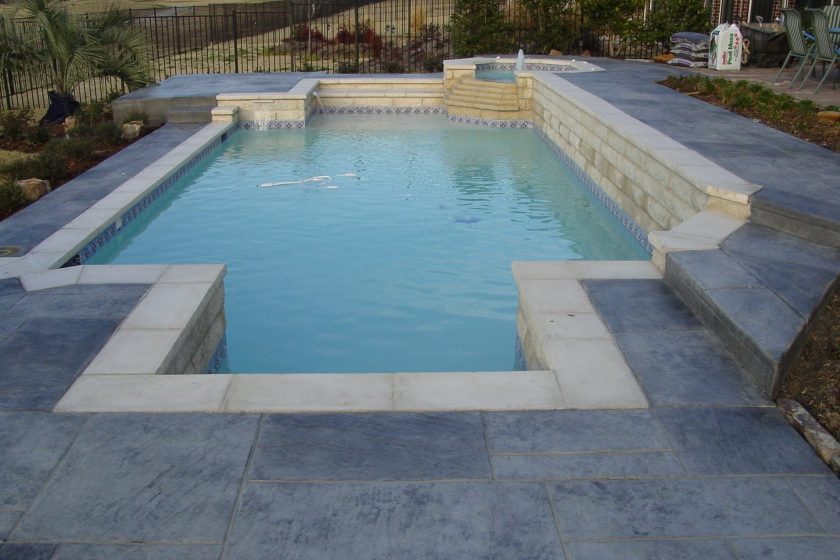
Building an inground pool in Dallas-Fort Worth costs about $45,000 to $300,000+ in 2026. A basic entry-level pool runs $45,000 to $70,000, while a mid-range custom pool commonly runs $70,000 to $120,000. Expansive clay soil can add another $5,000 to $30,000+ for engineering and mitigation.
Key takeaways
- DFW inground pools range from $45,000 to $300,000+ in 2026, with entry-level pools at $45,000 to $70,000.
- A mid-range custom pool commonly costs $70,000 to $120,000, while premium projects can reach $120,000 to $300,000+.
- North Texas clay-soil engineering and mitigation can add $5,000 to $30,000+.
- Hidden costs including permits, soil testing, fencing, utility work, insurance, and property-tax impact can add $5,000 to $20,000+.
- Hobert’s entry package starts in the low $50,000s for a 275-square-foot gunite pool with Pebble Sheen finish and travertine coping.
What this guide covers
- How much does it cost to build a pool in Dallas in 2026?
- What does each part of a DFW pool project cost?
- Why does North Texas expansive clay soil add $5,000 to $30,000+?
- Is gunite or fiberglass less expensive in DFW?
- What are the hidden costs of building a pool in DFW?
- How much does pool ownership cost over 10 years?
- How much does a pool cost in Rockwall, Murphy, Heath, Wylie and Frisco?
- Where does Hobert's entry pool package fit?
- How long does it take to build a pool in Dallas?
- How should I compare DFW pool quotes?
- About Hobert Pools & Spas
- Frequently Asked Questions
Updated September 2026
Those figures come from DFW Custom Pool’s 2026 cost guide, which also finds that DFW pool projects run about 20 to 30 percent above national averages. The final contract depends on the pool type, size, design, access, finish, deck, equipment, utilities, permitting and what the soil requires before the structure goes in.
This guide separates the base construction budget from the extras that are easy to miss. It also shows where Hobert Pools & Spas' entry package fits and how annual care changes the real cost over ten years.
How much does it cost to build a pool in Dallas in 2026?
Most DFW homeowners should begin with three working price bands. The first covers a straightforward pool with standard specifications. The second introduces a custom shape and upgraded finish. The third covers projects whose design, site conditions or surrounding outdoor scope move beyond the mid-range band.
| 2026 price tier | DFW market range | What the range includes |
|---|---|---|
| Entry | $45,000 to $70,000 | Basic rectangle with standard plaster |
| Mid-range | $70,000 to $120,000 | Custom shape, pebble finish and sheer descent |
| Premium | $120,000 to $300,000+ | Quote-defined custom work above the mid-range scope, potentially including a larger or more complex pool and broader outdoor-living work |
These are market planning ranges, not promises that every lot can support each tier. A small pool on a difficult site can cost more than a larger pool on an open, stable lot. Soil work and hidden project costs may also sit above an initial construction figure, depending on how a proposal is written.
The upper end is wide because a custom pool is not priced like a fixed retail product. Geometry, waterline length, interior area, deck area and access change the labor and material requirements. A homeowner comparing proposals should compare the written scope beside the total, not the total alone.
Set the working budget before selecting optional scope. Start with the appropriate construction tier, then reserve separate allowances for soil and hidden costs. This prevents a finish or deck choice from consuming money that may be needed for required site work, permits or utility connections later in the project.
What does each part of a DFW pool project cost?
Builders combine labor, materials and overhead differently, and site conditions change those numbers, so published market data does not assign a standard price to every trade. The table below shows which budget range each component falls under rather than inventing a line-item allowance.
| Construction line item | 2026 cost reference | How to read it |
|---|---|---|
| Excavation and site work | Included within the $45,000 to $300,000+ construction range | Difficult access and expansive clay mitigation can add $5,000 to $30,000+ |
| Installed gunite pool | $100 to $280 per square foot | National installed range reported by Angi, not a shell-only price |
| Gunite shell | Included within the $100 to $280 per-square-foot installed figure | Request the shell, steel and placement scope in writing rather than applying the installed rate to the shell alone |
| Coping | Included within the $45,000 to $300,000+ project range | Hobert's low-$50,000s entry package includes travertine coping |
| Interior finish | Included within the $45,000 to $300,000+ project range | Standard plaster appears in the $45,000 to $70,000 entry tier; pebble appears in the $70,000 to $120,000 mid-range tier |
| Decking | Included within the $45,000 to $300,000+ project range | Confirm deck material, area and any demolition in the proposal |
| Pool equipment | Included within the $45,000 to $300,000+ project range | Confirm every included system and control in the equipment schedule |
| Permits | Part of the combined $5,000 to $20,000+ hidden-cost range | The combined range also covers soil testing, fencing, utility work, insurance and taxes when applicable |
For a rough size check, the installed gunite range is $100 to $280 per square foot. Multiplying that range by 275 square feet produces $27,500 to $77,000. That calculation is a broad market check, not a quote and not the price of the gunite shell by itself.
The square-foot method also misses features that do not scale evenly with pool area. A proposal should state the pool dimensions and area, then identify the finish, coping, decking, equipment, access assumptions and excluded work. If two proposals use different measurements or exclusions, their totals are not directly comparable.
Ask the builder to label allowances and fixed prices. An allowance is a placeholder that can change when the final selection or site requirement is known. A fixed included item should identify the material and quantity. That distinction makes the line-item conversation more useful than asking for a percentage assigned to each trade.
Why does North Texas expansive clay soil add $5,000 to $30,000+?
North Texas soil is one of the most important local cost variables because expansive clay changes as its moisture content changes. A pool shell is a rigid structure placed in ground that can move. The budget question is therefore larger than how quickly a crew can excavate the hole. The design and construction plan must respond to the conditions found on that property.
Across the DFW market, clay-soil engineering and mitigation can add $5,000 to $30,000+. That is an allowance range, not an automatic charge on every pool. The required work depends on the site evaluation, engineering direction and conditions encountered. Homeowners should resist folding it into a vague contingency without a written explanation.
Ask whether soil testing or engineering is included, excluded or carried as an allowance. Then ask what event changes the price. A proposal may be based on assumed conditions, while the actual excavation exposes something different. The contract should explain how the builder documents that difference and prices the added work before proceeding.
The same conversation should cover access. Getting excavation equipment into a backyard, moving spoils out and working around existing improvements can affect site work even before soil mitigation begins. Those access costs are part of the broader construction discussion, while the $5,000 to $30,000+ figure in this guide refers specifically to clay-soil engineering and mitigation across the market.
Do not compare one builder's base number with another builder's soil-adjusted number. Put engineering, testing, excavation assumptions and mitigation on the same comparison sheet. If a proposal says only that soil work is extra, request the trigger and pricing method in writing. That turns a broad warning into a budget item a homeowner can evaluate.
Clay also belongs in the financing conversation. A household that can cover the base pool but has no room for site adjustments may be forced to cut finish or deck scope later. Carrying the full potential adder does not mean it will be spent. It means the project can absorb a documented soil requirement without derailing the design.
Is gunite or fiberglass less expensive in DFW?
Fiberglass has the lower starting point. DFW Custom Pool’s 2026 guide puts DFW fiberglass pools at $35,000 to $60,000 for entry-level projects and $60,000 to $90,000 for mid-range projects, with premium fiberglass from $90,000 to $150,000+. Installed gunite runs about $100 to $280 per square foot nationally, according to Angi. The figures use different units, so compare complete proposals for the same site rather than treating the endpoints as equivalent products.
| Pool type | 2026 cost | Price comparison |
|---|---|---|
| Fiberglass | $35,000 to $60,000 entry, $60,000 to $90,000 mid-range, $90,000 to $150,000+ premium | Lower market starting point; complete scope remains site- and proposal-dependent |
| Gunite | $100 to $280 per square foot installed (national) | Price scales with area and project specifications; this is not a shell-only figure |
| Overall DFW inground market | $45,000 to $300,000+ | Useful planning range across pool types and custom scopes |
Gunite is the material used in Hobert’s custom inground pools. Its pricing format reflects a project built around the property and design. Fiberglass pricing begins lower, but durability, warranty and installation terms vary by manufacturer and builder, so request those terms directly in writing.
When reviewing either type, confirm whether the price includes the same deck area, utilities, fencing, permits and site restoration. A lower construction number can still produce a higher completed budget when necessary work appears outside the quoted scope.
What are the hidden costs of building a pool in DFW?
Permits, soil testing, fencing, utility work, insurance and property-tax impact can add a combined $5,000 to $20,000+ across the DFW market. This range is separate from the dedicated $5,000 to $30,000+ clay-soil allowance because the two categories answer different questions. A project can encounter both.
| Potential hidden cost | Budget reference | What to confirm before signing |
|---|---|---|
| Permits | $1,000 to $3,000 | Who submits, pays and responds to corrections |
| Soil testing | $500 to $1,500 | Whether testing is included and when engineering becomes necessary |
| Fencing | $2,000 to $8,000+ | What work is required and whether it is inside the contract |
| Utility work | $500 to $5,000+ for utility relocation | Which electrical, plumbing or gas work is included |
| Insurance | $50 to $300 per year | What the homeowner's carrier requires and how the premium may change |
| Property tax impact | $300 to $1,500+ per year | How the local appraisal authority may treat the improvement |
| Clay engineering and mitigation | $5,000 to $30,000+ | Keep this separate from the combined hidden-cost allowance |
Permit responsibility should be explicit. Texas does not issue a statewide pool contractor license. The Texas Department of Licensing and Regulation licenses relevant trades such as electricians, plumbers and appliance installers. Homeowners can verify those subcontractor licenses at tdlr.texas.gov and should ask who coordinates required inspections.
Insurance and property taxes are easy to overlook because they do not arrive on the pool builder’s construction schedule. The item ranges above come from DFW Custom Pool’s 2026 guide, but premiums and tax impact vary by home, so contact the insurance carrier and local appraisal authority before finalizing the long-term budget.
Fencing and utility work also deserve early confirmation because they can involve parties outside the core pool crew. Ask who owns each task, when it must be complete and whether its cost appears in the contract. A clear responsibility list reduces the chance that required work surfaces after the construction budget is committed.
How much does pool ownership cost over 10 years?
Plan for the cost of owning the pool as well as building it. DFW Custom Pool’s 2026 guide puts ongoing ownership in DFW at about $3,500 to $8,000+ per year, covering routine maintenance, utilities, insurance and property-tax increases plus a fund for future repairs. Add ten years of those costs to a $70,000 to $120,000 mid-range build and the total comes to roughly $105,000 to $200,000 or more.
| Ownership cost | 2026 DFW estimate | What it covers |
|---|---|---|
| Annual ownership | $3,500 to $8,000+ per year | Routine maintenance, utilities, insurance, property-tax increases and a repair fund |
| Mid-range gunite construction | $70,000 to $120,000 | One-time build cost |
| 10-year total, mid-range gunite | About $105,000 to $200,000+ | Construction plus ten years of ownership at the annual range above |
Annual care belongs in the decision before construction, not after startup. At $3,500 to $8,000+ per year, ownership is a recurring household expense rather than a minor add-on. A ten-year view gives homeowners a better comparison between the backyard they want and the amount they are comfortable carrying after the build is paid.
Hobert includes Pool School owner training and startup service among its client services. That helps a new owner understand operation and care, but it does not remove the annual maintenance budget. Hobert also has an in-house service department for ongoing pool needs.
Ask for a free design consultation through Hobert's Murphy showroom or team serving Rockwall and use the $5,000 to $30,000+ clay range as a written planning question for the property.
How much does a pool cost in Rockwall, Murphy, Heath, Wylie and Frisco?
Published 2026 data covers the DFW metro as a whole, so the same $45,000 to $300,000+ planning range applies to these cities. No published source breaks construction averages out city by city. Local permit requirements, lot access, soil conditions and the contracted scope still need to be confirmed for the specific address.
| City | Starting framework | Local cost note |
|---|---|---|
| Rockwall | $45,000 to $300,000+ DFW range | Price the lot's clay, access, permits and utilities rather than relying on a city average |
| Murphy | $45,000 to $300,000+ DFW range | Compare the written pool, finish, coping, deck and excluded work |
| Heath | $45,000 to $300,000+ DFW range | Request current site-specific permit and engineering requirements |
| Wylie | $45,000 to $300,000+ DFW range | Keep the $5,000 to $30,000+ clay allowance separate during planning |
| Frisco | $45,000 to $300,000+ DFW range | Confirm current fees, access assumptions and utility scope for the property |
City names do not replace site evaluation. Two homes in the same municipality may have different access, soil or utility conditions. The sound comparison is property-specific: the same design assumptions, the same inclusions and a clear explanation of any allowances.
For each city, confirm current permit responsibilities with the builder and the applicable local authority. The market figures in this guide are suitable for initial planning, but they do not substitute for a current fee schedule or property review. Put any city-required work into the same written scope used to compare construction proposals.
Where does Hobert's entry pool package fit?
Hobert Pools & Spas starts its entry package in the low $50,000s. The package includes a 275-square-foot gunite pool, Pebble Sheen finish and travertine coping. That places it inside the DFW entry tier of $45,000 to $70,000 while including an upgraded interior finish and named coping material. See Hobert's pool options, financing information, and the portfolio alongside the written project scope.
The package is a starting specification, not a ceiling for every backyard. A project moves above it when the pool becomes larger or more complex, the site requires added engineering or mitigation, or the homeowner expands the contracted finish, deck, equipment, utilities or outdoor-living scope.
Before treating the package as the completed backyard price, ask for a written list of included work and exclusions for the property. Pay particular attention to permitting, fencing, soil testing, utility connections and clay mitigation. Those are the categories most likely to create a gap between an advertised starting point and an all-in household budget.
Hobert has built custom gunite pools since 1975 and serves the area through its Murphy and McLendon-Chisholm showrooms. Its proposal can be evaluated against the same checklist used for any DFW project: defined dimensions, materials, equipment, site assumptions, allowances, exclusions, payment schedule and responsibilities after startup.
Planning a pool in North Texas? Hobert Pools & Spas offers a free design consultation. Call the Murphy showroom at (972) 690-8118 or the McLendon-Chisholm showroom at (972) 772-3358, or start online.
How long does it take to build a pool in Dallas?
A Dallas pool build commonly takes 8 to 12 weeks. Hobert's published phase breakdown allows one to three weeks for design, two to four for permitting, one to two for excavation, and one to two for plumbing and steel. Gunite is listed as one week.
Electrical and gas work is listed as one week, tile, coping and decking as two to three weeks, finishing as one week, and completion and inspection as one week. These phases describe the work sequence. Homeowners should ask how the builder handles overlap, inspections and conditions that change the schedule.
How should I compare DFW pool quotes?
Start with one scope sheet and make each proposal answer it. Record the pool area and dimensions, material, interior finish, coping, deck area, equipment, water features, access plan, soil assumption, permit responsibility, utilities, fencing, cleanup, startup and owner training. Place every exclusion beside an allowance.
Then compare three totals: construction, possible site and hidden costs, and ten-year ownership. A useful planning model begins with the $45,000 to $300,000+ construction market, holds $5,000 to $30,000+ for clay if the site requires it, and reviews the separate $5,000 to $20,000+ hidden-cost range.
Price matters, but the contract controls what that price buys. If a proposal leaves an item open, ask for a written clarification before choosing a builder. Clear scope is what makes the market tables in this guide useful on a real property.
For builder comparisons, see the DFW pool builder list, the Dallas custom pool builder guide, and the Rockwall and Murphy pool builder guide.
Before finalizing a budget, schedule a free design consultation with Hobert and ask how the pool scope, soil conditions, and Pool School handoff apply to your address.
Planning a pool in North Texas? Hobert Pools & Spas offers a free design consultation. Call the Murphy showroom at (972) 690-8118 or the McLendon-Chisholm showroom at (972) 772-3358, or start online.
About Hobert Pools & Spas
Founded by Hobert Murphree in 1975, Hobert Pools & Spas has built in North Texas for over 50 years. The company specializes in custom gunite pools and has showrooms in Murphy and McLendon-Chisholm. Pool School provides owner training, and the in-house service department supports homeowners after startup.
Frequently Asked Questions
How much should I budget for a pool in Dallas in 2026?
Budget $45,000 to $70,000 for an entry-level inground pool or $70,000 to $120,000 for a mid-range custom pool across the DFW market. Premium projects can reach $120,000 to $300,000+. Keep separate room for clay mitigation and hidden costs when the site or contract requires them.
Why do pools cost more in DFW than the national average?
DFW pool projects run about 20 to 30 percent above national averages. Local expansive clay is one important reason because engineering and mitigation can add $5,000 to $30,000+. Site access, the selected design and what a proposal includes also affect the completed price for a North Texas backyard.
How much can North Texas clay add to my pool price?
Expansive clay engineering and mitigation can add $5,000 to $30,000+ across the DFW market. It is not an automatic fixed charge. Ask whether soil testing and engineering are included, what site condition triggers added work, and how the builder documents and prices a change after excavation begins.
Is a fiberglass pool cheaper than a gunite pool in Dallas?
Fiberglass usually starts lower. DFW Custom Pool’s 2026 guide puts entry-level fiberglass at $35,000 to $60,000 and mid-range at $60,000 to $90,000. Installed gunite runs about $100 to $280 per square foot nationally. Because those figures use different units and may cover different scopes, compare complete proposals for the same site, deck, utilities, permits and required soil work.
What does Hobert's low-$50,000s pool package include?
Hobert's entry package starts in the low $50,000s and includes a 275-square-foot gunite pool, Pebble Sheen finish and travertine coping. Larger dimensions, a more complex design, added deck or equipment scope, utility work, and required soil engineering can move a property-specific proposal above that starting package.
What hidden pool costs should I plan for in DFW?
Permits, soil testing, fencing, utility work, insurance and property-tax impact can add a combined $5,000 to $20,000+ across the DFW market. Clay engineering and mitigation has a separate $5,000 to $30,000+ range. Confirm which items are included, excluded or carried as allowances before signing.
How much does a gunite pool cost to own for 10 years?
Plan on about $3,500 to $8,000+ a year to own a pool in DFW once maintenance, utilities, insurance, property taxes and repairs are counted. Add that to a $70,000 to $120,000 mid-range gunite build and ten years of ownership comes to roughly $105,000 to $200,000 or more. Replace those ranges with your actual proposal and a household-specific care budget.
How long will my Dallas pool take to build?
A Dallas pool build commonly takes 8 to 12 weeks. Hobert's published sequence includes design, permitting, excavation, plumbing and steel, gunite, electrical and gas, tile, coping, decking, finishing, completion and inspection. Ask how site conditions, inspections and overlapping phases affect the schedule for your property.


