Gunite vs. Fiberglass Pools in Texas: Which Is Right for Your Yard?
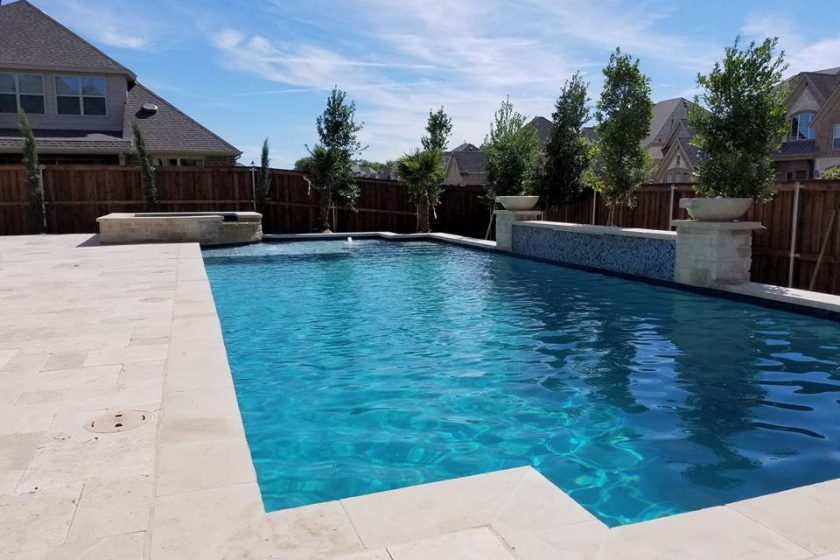
For most North Texas homeowners, the choice between a gunite pool and a fiberglass pool comes down to design freedom versus speed and upfront cost. Fiberglass usually costs less at the entry level and goes in faster, but the shell comes from a factory in set shapes and is limited to about 16 feet wide. Gunite costs more and takes longer to build, but it can be shaped to almost any size, depth, or layout your yard allows. Both can perform well on DFW clay soil when the site is engineered and installed correctly.
Key takeaways
- 2026 DFW price ranges run $45,000 to $300,000+ for gunite and $35,000 to $150,000+ for fiberglass, depending on size and features.
- A fiberglass shell is typically installed in 3 to 5 weeks once permits are approved. A custom gunite pool usually takes 8 to 12 weeks from excavation to completion.
- Fiberglass shells ship by road in one piece, so most max out around 16 feet wide and 41 feet long. Gunite has no factory size limit.
- Fiberglass has a smooth surface that makes algae easier to control. Gunite needs a new interior finish every 10 to 15 years, which is also a chance to change its look.
- Expansive clay affects both types. The quality of the soil work, backfill, and drainage matters more than the shell material.
What this guide covers
- Gunite vs. fiberglass at a glance
- What is the difference between gunite and fiberglass pools?
- How much does each pool type cost in DFW?
- How long does installation take?
- How much design flexibility do you get?
- How big can a fiberglass pool be?
- Durability, surface, and maintenance
- Are fiberglass pools good for Texas clay soil?
- Does either pool type add more resale value?
- Which pool type is right for you?
- About Hobert Pools & Spas
- Frequently Asked Questions
Updated September 2026
A note on who is writing this: Hobert Pools & Spas specializes in custom gunite pools, so we have a point of view. We have tried to give fiberglass a fair hearing anyway, because it is the right choice for some yards and some budgets.
Gunite vs. fiberglass at a glance
| Factor | Gunite (concrete) | Fiberglass |
|---|---|---|
| 2026 DFW cost, entry level | $45,000 to $70,000 | $35,000 to $60,000 |
| 2026 DFW cost, mid-range | $70,000 to $120,000 | $60,000 to $90,000 |
| 2026 DFW cost, premium | $120,000 to $300,000+ | $90,000 to $150,000+ |
| Typical build time | About 8 to 12 weeks from excavation to completion | About 3 to 5 weeks once permits are approved |
| Shape and size | Custom shape, size, and depth | Chosen from a manufacturer’s molds; most max out near 16 ft wide and 41 ft long |
| Interior surface | Plaster, quartz, or pebble finish | Smooth gelcoat |
| Surface upkeep | New finish every 10 to 15 years | Smooth surface makes algae easier to control; estimates for gelcoat life vary |
| Expansive clay soil | Needs site-specific soil work, reinforcement, and drainage | Needs careful backfill and drainage; do not drain the shell without groundwater control |
| Best fit | Custom layouts, large or odd-shaped yards, integrated spas and features | Standard shapes, faster timeline, lower entry cost |
Cost ranges are from a 2026 DFW pool cost guide, and the gunite tiers match our own 2026 DFW pool cost guide. Other sources for the table are linked in the sections below.
What is the difference between gunite and fiberglass pools?
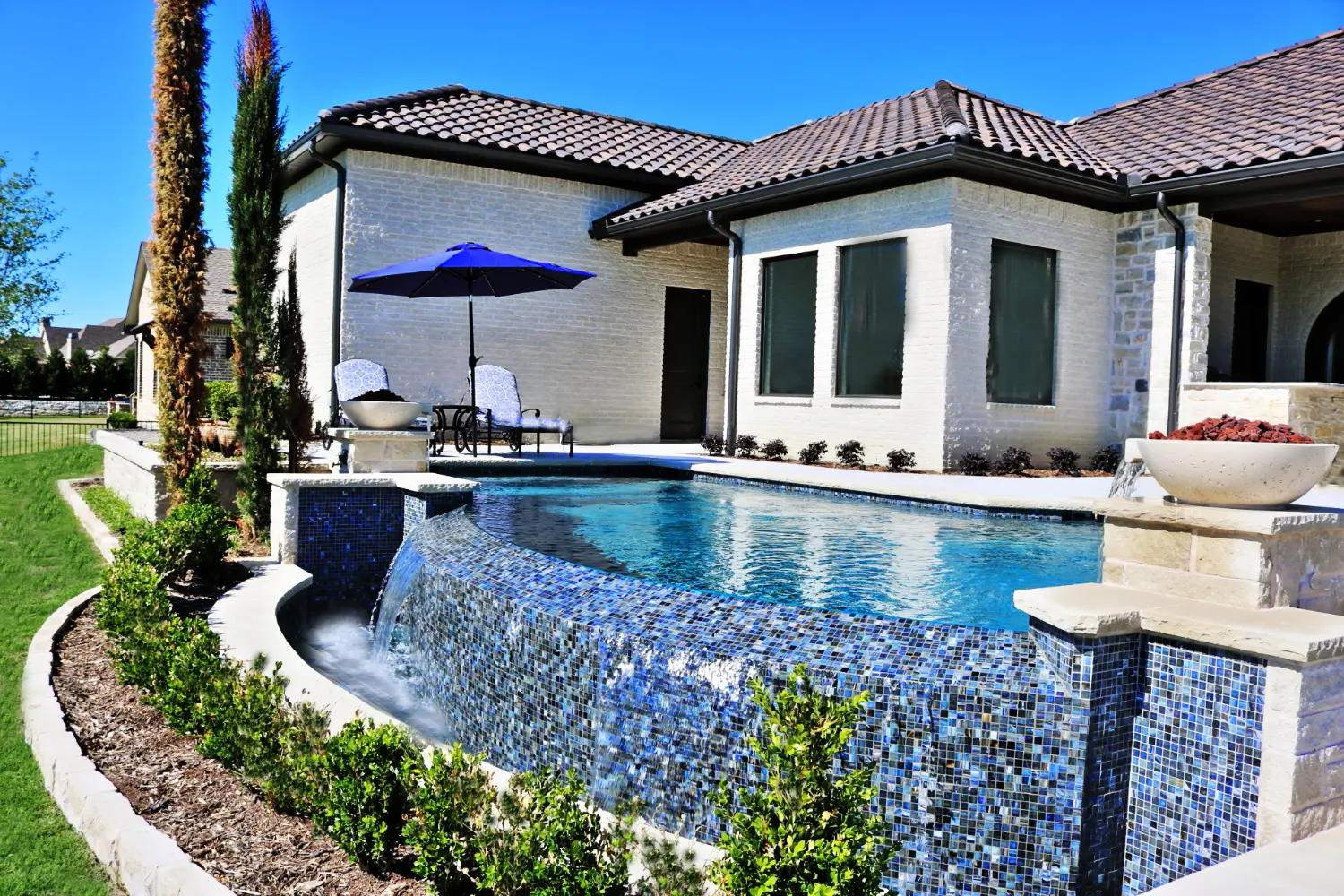
The difference is where the pool shell is made. A gunite pool is built on-site: the crew excavates the shape, ties a steel rebar framework, and sprays a concrete mixture called gunite over the steel under high pressure to form the shell. A fiberglass pool is a one-piece shell made in a factory, trucked to your home, and set into an excavated hole.
With gunite, water is added to a dry concrete mix at the nozzle. Wet-mix shotcrete, the other common method, arrives already mixed in a truck. If you want the details on how the two compare, see our guide to the difference between gunite and shotcrete.
How much does each pool type cost in DFW?
Fiberglass usually costs less at the entry level, but the two overlap a great deal once you add features. Published 2026 DFW estimates, summarized in our 2026 DFW pool cost guide, put gunite at $45,000 to $70,000 for an entry-level pool, $70,000 to $120,000 for mid-range, and $120,000 to $300,000+ for premium builds. Fiberglass runs $35,000 to $60,000 at entry level, $60,000 to $90,000 mid-range, and $90,000 to $150,000+ for premium projects.
The same guide calls expansive clay soil the biggest cost driver unique to North Texas, adding $5,000 to $30,000+ in engineering and mitigation. The guide presents that as a North Texas site cost, so plan for it with either pool type. For a fuller breakdown of price tiers and hidden costs, read our 2026 DFW pool cost guide.
If your budget or yard is on the small side, a precast concrete plunge pool is a third option worth a look. Hobert is a Plungie dealer, and a Plungie typically costs about half as much to install as a standard-sized traditional pool. Our Plungie pool guide covers sizes and installation.
How long does installation take?
Fiberglass is faster. Fiberglass manufacturer River Pools says an installation takes about 3 to 5 weeks once permitting is complete, with some finishing in 2 weeks and others running to 6. A custom gunite pool from Hobert typically takes 8 to 12 weeks from excavation to completion, depending on design complexity, weather, and permitting.
Neither number covers design and permits. Local 2026 estimates put the total at 3 to 6 months from contract signing to a swimmable pool under normal conditions, and 6 to 9+ months in peak season. Rain matters for both types. River Pools notes that one heavy rain can delay a project by weeks when a site does not drain well.
How much design flexibility do you get?
Gunite gives you far more. Because it is formed on-site, the shape, size, and depth are designed around your yard, including compact or sloped lots. Common additions on a gunite build include:
- Integrated spas
- Tanning ledges, beach entries, and swim-up bars
- Infinity edges
- Fire features, waterfalls, and LED lighting
- Custom depth configurations
- Plaster, quartz, or pebble interior finishes with tile and stone coping
With fiberglass, you choose from the shapes and sizes a manufacturer offers. You can still add lighting, decking, and landscaping around the shell. What you cannot do is change the shell itself. That can be a problem in an oddly shaped yard or when you want a spa and pool designed as one piece. You can see the range of custom work on our custom gunite pools page.
How big can a fiberglass pool be?
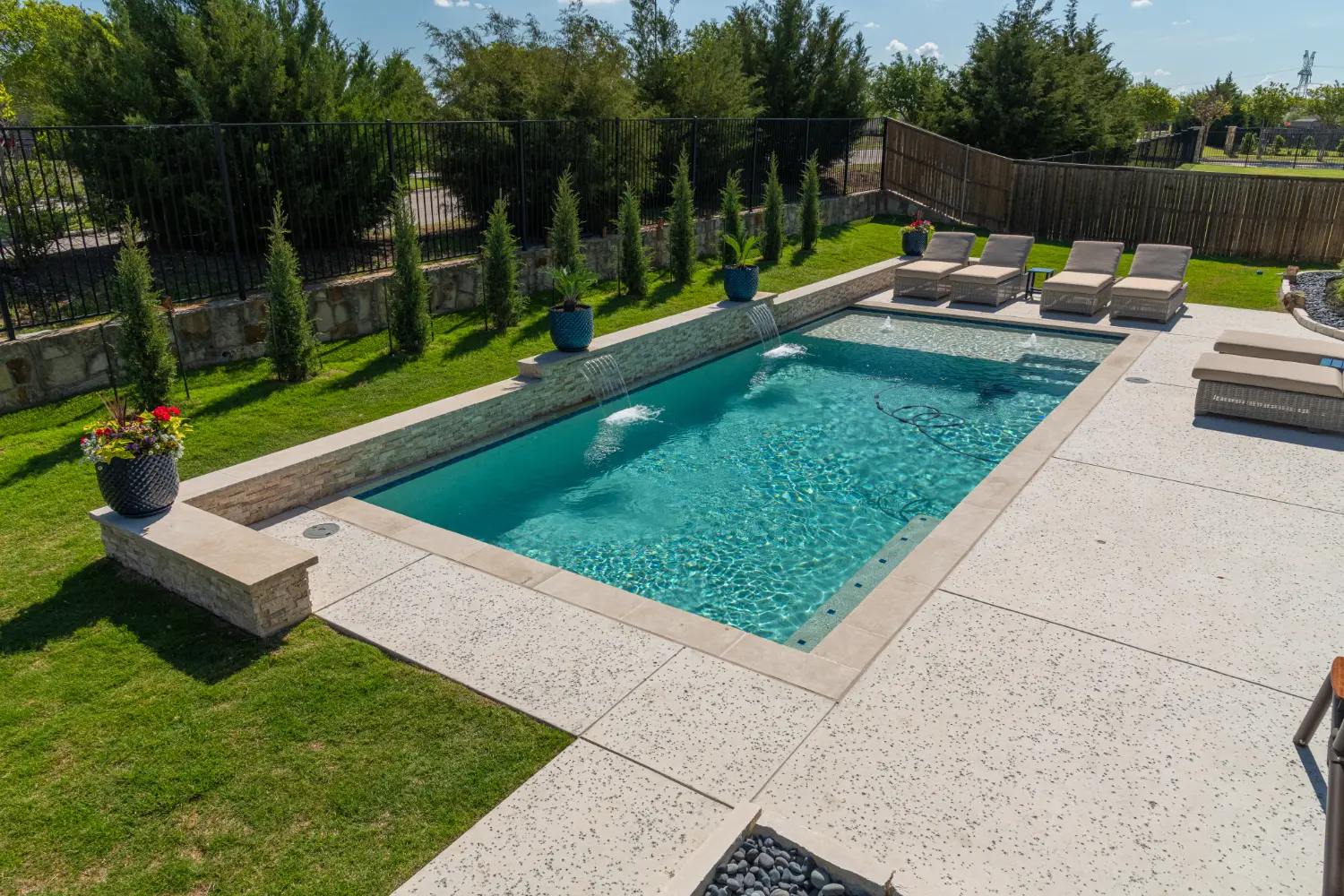
Most fiberglass pools top out around 16 feet wide. Fiberglass manufacturer Thursday Pools explains that the shells ship in one piece, most states set 16 feet as the oversize load limit for road transport, and most models max out at 16 feet wide and 41 feet long. On the small end, River Pools says shells are usually at least 20 by 10 feet, and occasionally as small as 15 by 8 feet.
A gunite pool is not shipped, so it has no transport limit. The practical limits are your lot, setbacks, budget, and local codes.
Durability, surface, and maintenance
Both types can last for decades with good care. They differ mostly in the interior surface and what it takes to keep it looking right.
Gunite surface and upkeep
A gunite shell is reinforced concrete with a plaster, quartz, or pebble finish on top. That finish wears over time. Fixr says concrete pools need a complete resurfacing every 10 to 15 years, and notes the rougher surface can trap bacteria that lead to algae if chemistry and brushing slip. The upside is that resurfacing lets you refresh or change the look of the pool over time.
Fiberglass surface and upkeep
Fiberglass has a smooth gelcoat surface, and Fixr says that smoothness makes algae easier to control. That usually means less brushing. Estimates for how long the gelcoat lasts vary a lot. Fixr says the gel finish may need to be reapplied every 10 years, while River Pools, a manufacturer, says a modern gelcoat should last 30 to 40 years, and that premature fading almost always comes from poor water chemistry. Ask any fiberglass installer for the specific surface warranty on the model you are considering.
Are fiberglass pools good for Texas clay soil?
Yes, fiberglass pools can work in Texas, but on expansive clay the installation matters more than the shell. The same is true for gunite. Neither pool type is immune to ground movement, and both depend on proper soil prep, backfill, and drainage.
More than 90% of the DFW area is estimated to sit on highly expansive clay. A typical example is Houston Black clay, found across the Texas Blackland Prairies. The USDA soil description lists it as having high shrink-swell potential, with cracks 1/2 to 4 inches wide when it dries. That swelling and shrinking puts pressure on anything buried in it.
Clay soil and gunite pools
With gunite, the structure is designed and reinforced on-site, so the engineering can respond to what the soil report shows. Typical measures include geotechnical soil reports ($500 to $1,500), specialized excavation, piers, structural reinforcement, over-excavation with engineered backfill, and drainage. That work is where the $5,000 to $30,000+ clay adder comes from.
Clay soil and fiberglass pools
With fiberglass, the shell is fixed, so the focus is on what goes around it. Fiberglass manufacturer Barrier Reef Pools notes that clay can expand significantly when wet and shrink when dry, and calls the backfill type possibly the most important factor in the long-term success of the installation. It describes washed gravel as a sturdy backfill with excellent drainage and stability.
Groundwater and draining a pool
Groundwater pushing up from below, called hydrostatic pressure, can lift an empty pool of either type. River Pools notes that with enough uplift, concrete pools can float, and fiberglass pools can pop up too, though it says that is uncommon. A full pool is heavy enough to hold its place, which is why the standard advice is not to drain a pool yourself. For fiberglass, River Pools says groundwater around the shell needs to be pumped out before the pool is emptied or the water level lowered significantly.
Planning a pool project in North Texas? Hobert Pools & Spas offers a free design consultation. Call the Murphy showroom at (972) 690-8118 or the McLendon-Chisholm showroom at (972) 772-3358, or start online.
Does either pool type add more resale value?
There is no reliable evidence that one type adds more resale value than the other. Fixr says both concrete and fiberglass pools can increase a home’s resale value, provided they are properly maintained. Keeping up with water chemistry, equipment, and surface care protects that value whichever type you choose.
Which pool type is right for you?
Match the pool to your yard, timeline, and what you want the backyard to do.
Fiberglass may suit you if
- A standard shape from a manufacturer’s catalog fits your yard and plans
- You want the lowest entry cost for a full-size inground pool
- A shorter build window matters to you
- You want a smooth surface that takes less brushing
Gunite may suit you if
- You want a custom shape, a pool wider than about 16 feet, or a specific depth plan
- Your yard is irregular, compact, or sloped
- You want an integrated spa, tanning ledge, infinity edge, or fire and water features
- You plan to tie the pool into patios, an outdoor kitchen, or other outdoor living spaces
- You like the option of refinishing the interior to change the look later
If you are leaning toward gunite, our article on the benefits of a gunite pool goes deeper on design options and finishes. If you are comparing gunite pool builders in Dallas, ask each one how they handle soil testing and drainage on clay lots, and what their warranty covers.
Planning a pool project in North Texas? Hobert Pools & Spas offers a free design consultation. Call the Murphy showroom at (972) 690-8118 or the McLendon-Chisholm showroom at (972) 772-3358, or start online.
About Hobert Pools & Spas
Hobert Pools & Spas is a family-owned custom gunite pool builder founded in 1975 by Hobert Murphree, with showrooms in Murphy and McLendon-Chisholm. The team designs and builds new custom gunite pools, handles pool renovations and outdoor living projects, offers pool service, and teaches new owners at Pool School. Hobert is also a Plungie pool dealer. To talk through your yard, contact the team for a free consultation.
Frequently Asked Questions
Is a gunite or fiberglass pool cheaper in Dallas?
Fiberglass is usually cheaper at the entry level. 2026 DFW cost estimates put entry-level fiberglass at $35,000 to $60,000 and entry-level gunite at $45,000 to $70,000. The ranges overlap once you add decking, features, and clay soil work, which can add $5,000 to $30,000 or more to either type.
Are fiberglass pools good in Texas?
They can be. Fiberglass pools are installed across Texas, but on expansive clay the result depends on proper backfill, drainage, and groundwater control. The same is true of gunite pools. Ask any installer how they plan to handle your specific soil.
How wide can a fiberglass pool be?
Most fiberglass pools max out at about 16 feet wide and 41 feet long, because the one-piece shells travel by road and most states set 16 feet as the oversize load limit. A gunite pool is built on-site and has no shipping limit.
How long does it take to install each type?
A fiberglass installation typically takes about 3 to 5 weeks once permits are approved. A custom gunite pool from Hobert typically takes 8 to 12 weeks from excavation to completion, depending on design complexity, weather, and permitting.
Do fiberglass pools last as long as gunite pools?
Both can last for decades with good care. A gunite pool needs a new interior finish about every 10 to 15 years, which also lets you update its look. Estimates for fiberglass gelcoat life range from about 10 years before refinishing to 30 to 40 years, depending on the source and on how well water chemistry is kept.
What type of pools does Hobert Pools build?
Hobert Pools & Spas specializes in custom gunite pools, designed around each yard. For smaller yards or tighter budgets, Hobert is also a dealer for Plungie precast concrete plunge pools.


